
A Simple Guide To Degus
A Simple Guide To Degus Degus are active, intelligent rodents that love to climb, chew, and explore with their group…
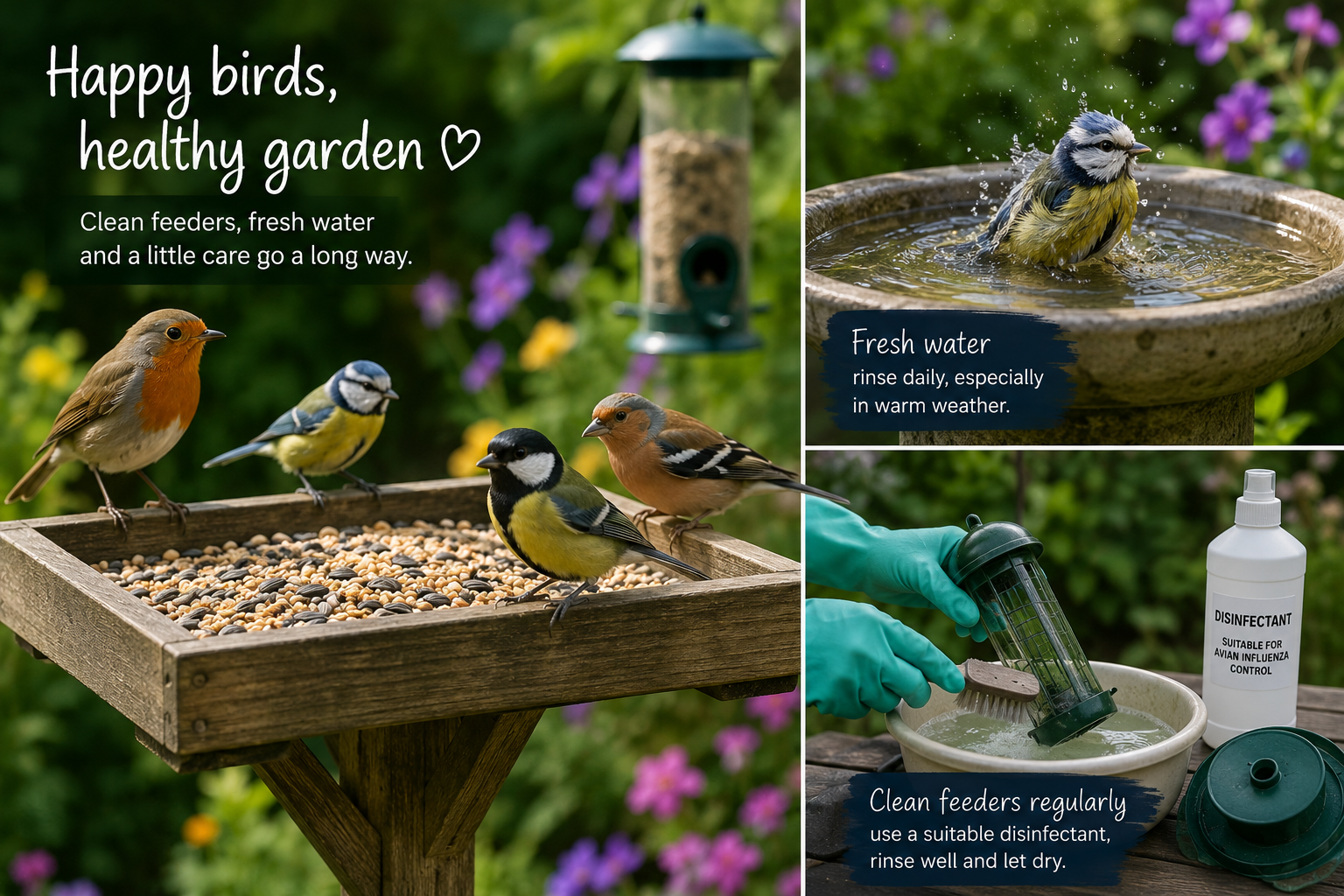
Feeding wild birds is one of life’s simple pleasures — especially when your garden becomes a busy little café for robins, finches, sparrows and starlings.
But while feeding birds helps support local wildlife, it’s just as important to keep feeding areas clean and hygienic. Like all animals, wild birds can spread disease if feeders, drinkers and bird baths aren’t cleaned regularly.
A few simple habits can make a huge difference in keeping your feathered visitors healthy and happy.
Many bird diseases are spread through droppings. If contaminated droppings mix with food or water, other birds visiting the feeder can quickly become infected.
Mouldy food, dirty water and even unwanted visitors like rats can also spread harmful bacteria and disease around feeding areas.
That’s why regular cleaning is one of the best ways to protect the birds visiting your garden.
It’s not always easy to spot a poorly bird, but there are a few common warning signs to look out for:
Healthy wild birds are usually alert and cautious, so if one seems unusually tame or weak, it may be unwell.
Unfortunately, by the time a sick wild bird can be caught, it’s often already very poorly. Treating birds through food or water is also not recommended, as there’s no safe way to make sure the right bird gets the correct dose.
The best approach is prevention — keeping feeding areas as clean as possible to reduce the risk of disease spreading in the first place.
Bird feeders and feeding tables should be cleaned regularly to remove droppings, old food and mould.
A feeder full of stale seed might not look too bad to us, but for birds it can quickly become a breeding ground for bacteria.
Ideally:
UK Pet Food recommends using a disinfectant suitable for avian influenza control, following the manufacturer’s instructions carefully.
If bird food is still sitting there days later, you’re probably putting out too much.
Smaller amounts topped up regularly help keep food fresher and reduce waste.
Hanging feeders or raised bird tables are usually best, as they help keep food away from damp ground and unwanted pests.
Try to avoid:
Moving feeding stations occasionally can also help prevent waste and droppings collecting underneath.
Birds need clean water for both drinking and bathing.
Water containers should ideally be rinsed and refilled daily, especially during warm weather when bacteria can multiply faster.
Bird baths also benefit from a proper scrub every now and then to remove algae, droppings and grime.
A quick hand wash goes a long way.
It’s a simple step that helps protect both people and wildlife.
Watching wild birds enjoy your garden is brilliant fun — and with a little regular cleaning, you can help create a safe, healthy space for them to visit all year round.
Your garden birds will thank you for it… probably by shouting loudly at 5am for breakfast.
